Twillory Performance Linen Shirt Guide: Fabric, Fit, Care, and When to Wear It
The Twillory Performance Linen Shirt is a quality button-down built from an 82% cotton, 13% linen, 5% spandex blend. It is midweight, machine-washable, designed with a length that can be tucked or left untucked, a hidden button-down collar and lined two-button cuffs. It is meant to do what a pure linen shirt cannot: hold its shape through a full day, resist wrinkling, look great after a trip in the washing machine, and move with the body without clinging or putting up a fight.
At a Glance
- What it is: A button-down woven shirt built on an 82/13/5 cotton-linen-spandex blend in a midweight twill weave. It reads as pure, nubby linen from across the room and wears closer to a soft cotton shirt against the skin.
- What it's made of: 82% cotton gives it structure and wrinkle resistance. 13% linen adds breathability and surface texture. 5% spandex keeps it from pulling across the shoulders or back during a full day of movement.
- What it solves: The two problems most shirts fail at simultaneously: looking polished and staying comfortable in warm outdoor conditions. In most cases, this shirt can be pulled from the dryer, hung, and worn without ironing. A quick warm iron smooths any minor creases if you want a more polished finish.
- Who it fits: Available in S through 2XL in a tailored silhouette that slightly narrows through the torso without tugging at the chest buttons or pulling at the shoulders. It gives enough room through the arms for a full range of motion while keeping the overall line clean rather than boxy.
- How it differs: A 100% linen shirt wrinkles quickly, breaks down fast, and requires more care. A standard cotton oxford is stiffer and heavier in summer heat. The Performance Linen Shirt sits between them: the breathability and look of linen, the comfort and machine-washability of cotton.
What is the Performance Linen Shirt?
The Performance Linen Shirt is Twillory's take on warm-weather button-downs: a cotton-majority blend with enough linen to read warm weather-coded and enough spandex to never constrict on the body. The fiber breakdown is 82% cotton, 13% linen, and 5% spandex, woven in a midweight twill construction.
Each fiber has a specific job. The cotton majority handles structure, opacity, and durability. That is part of why the shirt is designed to resist heavier wrinkling through sitting and movement. The 13% linen contributes breathability and the subtle slub texture visible on the surface, which is the visual cue that tells the eye linen. The spandex component, at just 5%, is enough to give the fabric two-way recovery without creating the synthetic sheen or performance-wear feel that a higher spandex percentage would introduce.
The cotton-majority ratio is a deliberate choice. A 100% linen shirt tends to breathe a bit better in still air, but it also wrinkles more readily, and drapes looser as the day goes on. A cotton-majority blend at 82% is designed to hold its construction more consistently through wear and washing. The linen percentage is there to do what linen does visually and thermally without taking over structurally.
The midweight twill weave matters here too. Twill runs diagonal yarn lines across the face of the fabric, which produces a denser, more stable surface than a plain weave at the same weight. That density is part of why this shirt stays opaque and resists wrinkling without being too heavy on the body.
How it compares to 100% linen and a cotton oxford
The Performance Linen Shirt sits between two category defaults — a pure linen shirt and a standard cotton oxford — on every metric that matters in summer.
Trait |
Performance Linen Shirt (82/13/5) |
100% Linen Shirt |
Cotton Oxford |
Look |
Linen surface texture |
Linen surface texture |
Smooth, structured |
Wrinkle resistance |
Better than pure linen |
Wrinkles readily |
Will wrinkle with heat/wet |
Breathability |
Moderate — natural fibers + cotton density |
Highest — most airflow |
Lowest — densest weave |
Drape on the body |
Holds shape; mild softening over time |
Softens and relaxes faster |
Holds shape, stiffer |
Opacity (white) |
Higher — cotton-heavy twill |
Lower — open weave |
Highest |
Stretch |
Yes — 5% spandex |
None |
None |
Washability |
Machine wash |
Often hand-wash or delicate |
Machine wash |
Best for |
Office, weddings, travel, casual |
Hot vacation, beach, casual heat |
Year-round office, layering |
The takeaway: if you want maximum breathability and authentic linen feel and you accept the wrinkles, 100% linen wins. If you want maximum structure and lowest-maintenance and you accept the heat, a cotton oxford wins. If you want a shirt that splits the difference — readable as linen, behaves more like cotton — a performance linen blend like this one is the category answer.
How it feels and how it reads
The shirt drapes with the smoothness and weight of a midweight cotton but carries a linen surface that reads as linen to anyone in the room. That split between what your hands tell you and what everyone else sees is the point of the blend.
Against the skin, the hand feel is smooth with a faint surface interest. It is not crisp the way a dress shirt is, and it is not slubby and irregular the way a raw linen shirt is. The weight sits lightly on the shoulders. Drape is controlled rather than fluid. When the fabric catches direct light, the diagonal twill lines and linen texture create the kind of low-key surface depth that looks more considered than a flat cotton weave.
The stretch component means the shirt moves with you rather than pulling across the back or shoulders when you reach forward or cross your arms. That sounds like a small thing until you spend a day in a shirt that does not have it.
The practical benefit is simple: it looks like a linen shirt, but it tends to stay neater than most linen shirts through the day. What someone else sees is a textured linen-look shirt that reads as pressed and deliberate, without having to be ironed an hour before. It reads as put-together without trying. The wrinkles you do accumulate are usually the easy kind — the fabric shaping to your body — so it tends to still look great by evening in a way 100% linen typically does not.
How it's built
The Performance Linen Shirt is built around four construction choices that separate it from a generic button-down: a hidden-button collar, lined two-button cuffs, an untucked-length hem, and a midweight twill weave.
The hidden button-down collar works like this: the collar points are anchored by buttons that sit on the underside of the collar against the shirt body, so there are no visible collar buttons on the front face of the shirt. The collar points stay flat and tethered through the day without the visual interruption of exposed hardware. The result looks cleaner than a standard button-down in formal settings while still giving the collar the control of a button-down in casual ones.
The lined two-button cuffs are the detail most shoppers overlook until they have worn the shirt. An unlined cuff on a linen-blend shirt tends to go soft and slightly floppy by midday because the fabric relaxes. A lined cuff holds its shape because there is internal structure. Two buttons rather than one allow the cuff to sit closer to the wrist without pulling, which keeps the sleeve from bunching when a jacket or sport coat goes over it.
The hem length is cut for untucked wear. It sits around mid-fly with a slight side-seam rise, which means the front and back panels sit flat and even rather than billowing out or folding under. A shirt cut at dress-shirt length worn untucked creates extra volume and uneven drape below the waistband. This one does not.
A small additional detail: the back label area is lined. It is the kind of thing the brand did because it improves how the collar feels against the back of the neck, and it is the kind of thing you notice in a shirt you wear often.
Where it earns its place in your week
The Performance Linen Shirt earns its place across a normal week by sitting in the middle of the formality scale: dressy enough for a business-casual office, casual enough for a Saturday lunch. That range is what makes it a shirt that actually gets worn rather than saved.
On a weekday morning in a casual office, it works open at the collar with chinos or dress trousers. It does not need a jacket. It wears cool in an air-conditioned building without looking like a weekend shirt. In warm outdoor conditions, the natural fibers in the blend help the shirt feel more breathable than many fully synthetic performance shirts, so it holds up on a warm commute.
For a dinner out or a date, the linen texture reads as sophisticated without requiring a tie or sport coat. It looks at home in a casual restaurant without the effort of fully dressing up. The shirt does the work for you.
On weekends, it handles the full range: a Saturday farmers market or errand run, a beach lunch where you are going to be in the heat and then at a table, a travel day through airports and a warm destination. The machine-washable fabric means a shirt that has been through a travel day goes into the hotel laundry and comes back ready rather than going into a bag to deal with later.
For an outdoor wedding or garden event, the white version reads as proper. With dress trousers and a sport coat, it sits at the formality most warm-weather weddings call for.
Building outfits around it
Building an outfit around the Performance Linen Shirt is mostly a question of how dressy you want the rest of the look. The shirt is the constant; everything else dials it up or down.
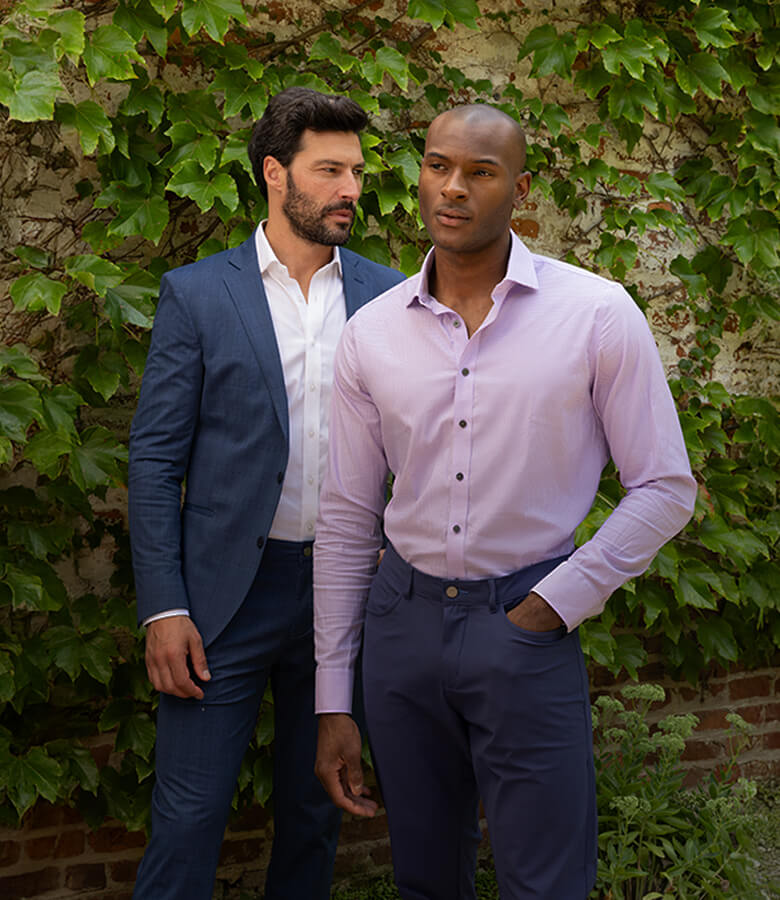
At the dressier end, the shirt works with tailored chinos or dress trousers and a sport coat. Loafers in tan or brown leather complete that version. The hidden button-down collar sits cleanly under a jacket lapel in a way an unfused or unstructured collar does not.
Stripped of the jacket, the same shirt over slim chinos or drawstring linen pants with loafers or white leather sneakers covers the business-casual to smart-casual range. This is the shirt's most-used register for most people.
At the casual end, the shirt tucked into shorts or worn open over a plain crew-neck works for weekend and travel moments.
The white version specifically solves a particular problem: it is the cleanest visual option for summer outdoor events, the easiest to pair because it works with any trouser or short color, and the most likely to read as dressed-up when the context calls for it. Because the shirt has opacity from the cotton-heavy twill, the concern about sheerness that applies to lighter-weight linens is less of a factor here.
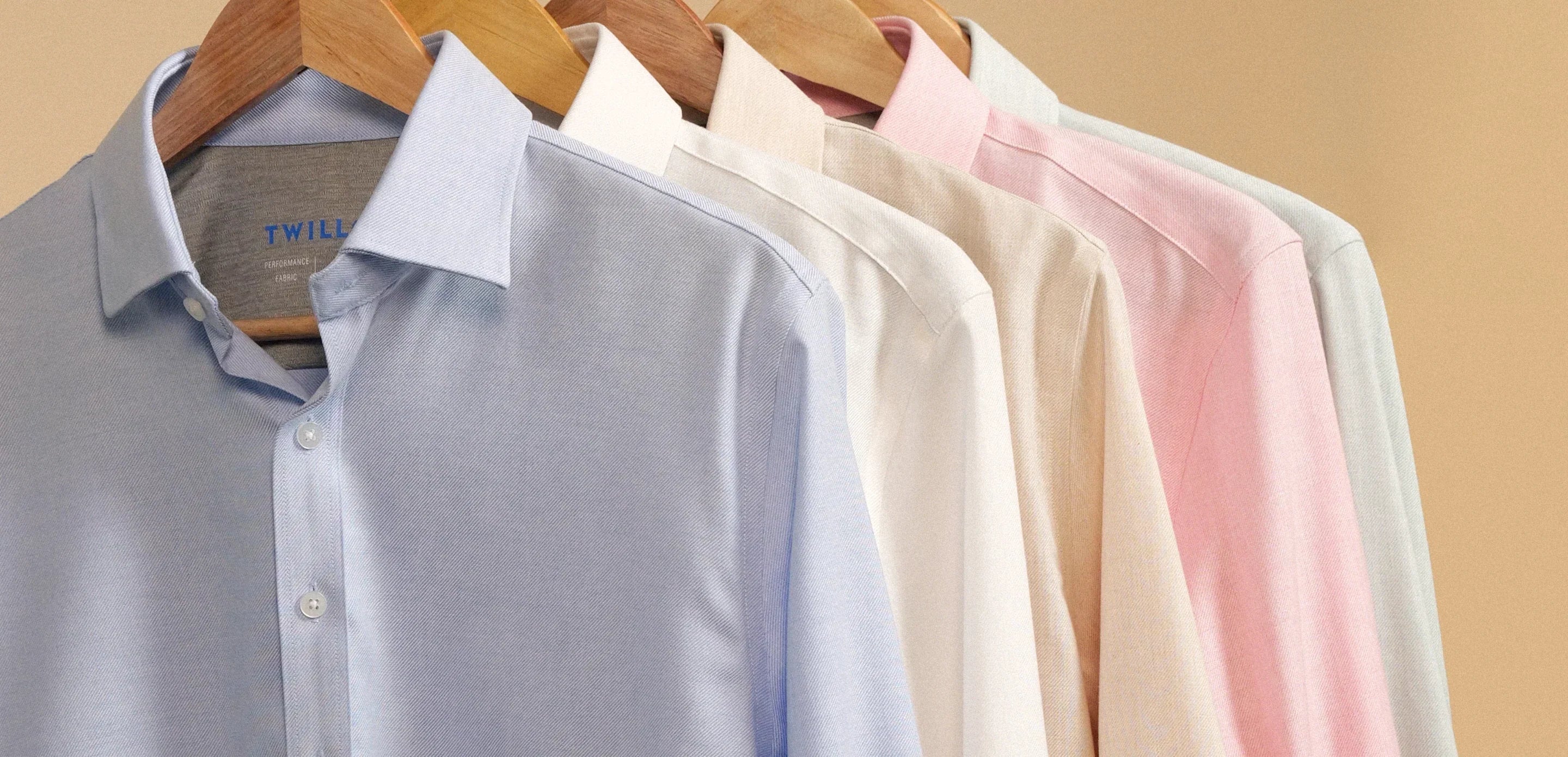
The other colorways — Light Blue, Khaki, Red, and Green — follow the same styling logic. Light Blue is the most versatile alternative to white in the same office and occasion range. The others are statement choices for the same silhouette. For a first shirt in this style, white tends to cover the widest range of contexts among the five colors offered.
How it ages
The Twillory Performance Linen Shirt is designed to weather more like a well-built cotton shirt than like pure linen, which is largely a function of the cotton-heavy blend.
A 100% linen shirt tends to soften aggressively across repeated washes. The fabric can move from structured to loose, the collar can lose body, and over time the shirt often becomes comfortable but relaxed in a way it was not when new. A cotton-majority blend like this one is built to follow the cotton curve instead, with a slower, more gradual softening rather than continued relaxation. With normal care, the intent is for it to feel broken-in rather than worn out after repeated wear.
The areas that typically show age first on any shirt are the cuff fold and the collar band. The lined cuffs are constructed to help slow this, since internal structure absorbs some of the flex stress that an unlined cuff would take on the face fabric alone. A fully constructed collar will generally hold its shape longer than a lightly fused or unfused one.
The surface texture of the linen component can also become more pronounced as the fabric softens slightly with wear — many wearers find that part of the appeal grows over time rather than fades.
The shirt lives in a normal laundry rotation. Machine wash cold and tumble dry medium; wash the light versions with similar colors. No special handling required, no steamer needed before wearing. That low-friction relationship with laundry is part of what makes a shirt get used instead of accumulated.
Is the Performance Linen Shirt right for you?
The Performance Linen Shirt is the right shirt if you want one warm-weather button-down that handles a hot afternoon, a casual office, a beach lunch, and an outdoor wedding from the same hanger.
Yes, if you:
- Want a linen-texture shirt that does not need ironing before each wear
- Work in a business-casual office and need warm-weather options that hold their shape through the day
- Prefer machine-washable shirts over dry-clean-only options
- Run warm and want natural-fiber breathability without sacrificing structure
- Want a tailored fit that moves with you rather than restricting or going slack
- Are buying a first white linen-look shirt and want one that covers the full occasion range
- Are of a shorter height, and find most shirts reach too low on your frame
Maybe not if you:
- Want the soft, fluid drape of a true 100% linen shirt and are willing to deal with heavier wrinkling to get it
- Prefer a boxy or relaxed fit; this shirt is cut with a tailored taper and will read fitted on broader frames
- Need a shirt that tucks cleanly under dress trousers for formal settings; the untucked-length hem works better worn out
- Only wear shirts in extreme heat with no air conditioning and want maximum breathability above all other factors
The full range of colors and sizes is available on the Twillory Performance Linen Shirt product page.